Skip to content
Holiday gatherings call for a show-stopping centerpiece, and nothing quite delivers like a beautifully cooked prime rib roast. This cherished family recipe elevates your festive meal with restaurant-quality results, simplified for every home cook. We’re sharing our tried-and-true secrets to create the perfect prime rib roast family recipe that will impress everyone at your table, making special occasions truly unforgettable.
Why You’ll Love This Perfect Prime Rib Recipe
Making a spectacular meal doesn’t have to be complicated! This perfect prime rib roast family recipe offers an incredible experience for both cooks and diners.
- Achieve restaurant-quality results with easy-to-follow, beginner-friendly steps.
- Enjoy a rich, aromatic herb and garlic crust that locks in incredible flavor.
- Create an undeniably impressive centerpiece for any special celebration or holiday.
- Adapt this flexible recipe easily, whether you have a small or large roast.
- Follow our expert tips for achieving a consistently perfect medium-rare doneness every single time.
Ingredients
Gather these quality ingredients to prepare the perfect prime rib roast family recipe. Quantities are per pound of roast, ensuring consistent flavor.
- A bone-in prime rib roast (see note 2 if your roast is 6 lbs or less)
- 1/3 medium onion (large dice or thickly sliced; approx. 1/3 medium onion per pound, up to 4-5 onions total; see note 3)
- 1 teaspoon Kosher or coarse sea salt per pound (1 tsp per lb/450g)
- ½ teaspoon freshly ground black pepper per pound (1/2 tsp per lb/450g)
- 1 teaspoon minced garlic per pound (1 tsp per lb/450g)
- 1 teaspoon fresh rosemary per pound (1 tsp per lb/450g)
- 1 teaspoon fresh thyme per pound (1 tsp per lb/450g)
- ½ teaspoon olive oil per pound (1/2 tsp per lb/450g)
Notes & Substitutions
“Prime” in prime rib actually refers to the cut of meat itself, from the primal rib section, not necessarily its USDA grade. For an in-depth explanation of beef quality, including Prime and Choice, consult the USDA beef grading scale. Look for USDA Choice or Prime grade for excellent marbling and flavor. Marbling (the flecks of fat within the meat) adds juiciness. Bone-in roasts offer more flavor and insulation during cooking; boneless roasts cook slightly faster. Feel free to substitute dried herbs using one-third of the fresh amount, or experiment with other fresh herbs like oregano or marjoram. The onions under the roast add moisture and flavor to the drippings for your au jus.
Equipment
Having the right tools simplifies your cooking process and ensures the best results for your prime rib.
- Roasting pan with a sturdy rack
- Large mixing bowl
- Plastic wrap
- Meat thermometer (an absolute must-have!)
- Aluminum foil
- Fat separator
- Small pot or sauté pan
Instructions
Follow these clear, numbered steps to create the perfect prime rib roast family recipe that will be the highlight of your meal. Precision and patience are key!
1. Prepare and Marinate the Roast
Begin by rinsing your prime rib roast under cold water, then thoroughly pat it dry with paper towels. A dry surface helps achieve a beautiful crust. Place your roasting rack into the pan, then spread the diced or sliced onions evenly across the bottom. In a mixing bowl, combine the salt, pepper, minced garlic, fresh rosemary, fresh thyme, and olive oil. Mix these ingredients thoroughly to create a fragrant herb paste. Evenly rub this flavorful marinade over the entire surface of the prime rib roast. Cover the marinated roast tightly with plastic wrap and refrigerate it overnight for at least 8 hours, or up to 24 hours. This crucial step allows the flavors to deeply penetrate the meat.
2. The Roasting Process
Take your prime rib roast out of the refrigerator two hours before cooking. This allows the meat to come to room temperature, promoting more even cooking. Preheat your oven to a high temperature of 450°F (230°C). Carefully place the roast, fat-side up, directly onto the onions and rack in the lower third of your oven. This position helps prevent the top from charring too quickly. After 30 minutes of high-heat roasting, carefully pour 1/2 cup of hot water into the bottom of the roasting pan, around the onions. Rotate the roast 180 degrees to ensure even browning, then cook for another 30 minutes at 450°F.
Reduce your oven temperature to 350°F (175°C) and continue cooking. Baste the roast every 30 minutes with the pan juices to keep it moist and flavorful. If the pan juices evaporate too much, add more hot water, 1/4 cup at a time, to prevent scorching the drippings. If you notice the top of the roast browning too quickly, loosely tent it with aluminum foil to protect it. Continue roasting until the internal temperature reaches your desired doneness, as outlined in the next step.
3. Achieve Perfect Doneness
Estimating 15 minutes per pound serves as a general guideline, but always rely on a reliable meat thermometer for accuracy. To ensure food safety and the best flavor, understanding how to use a meat thermometer correctly is vital. Insert the thermometer into the thickest part of the roast, avoiding bone.
- 125°F (51°C) for a perfect medium-rare.
- 120°F (49°C) for a delicious rare.
- 115°F (46°C) for a super-rare result.
Remember that carry-over cooking will increase the internal temperature by an additional 5-7°F after you remove the roast from the oven. Remove the roast when it reaches the lower end of your desired temperature range.
4. Rest and Serve
Once your prime rib reaches the target temperature, carefully transfer it from the roasting pan to a clean cutting board. Tent the roast loosely with aluminum foil to retain heat and allow the juices to redistribute. Let it rest for a crucial 20 minutes; this prevents juices from escaping when sliced. While the roast rests, prepare your au jus. Strain the pan juices through a fine-mesh sieve into a fat separator, discarding the cooked onions. Pour the separated defatted juices into a small pot and gently warm it over low heat. Slice the rested prime rib against the grain into thick, impressive portions. Serve immediately with the warm au jus and a dollop of creamy horseradish sauce, if desired.
Pro Tips & Troubleshooting
Mastering your prime rib is easy with these helpful hints for a stress-free experience.
- Choosing the right roast: A first cut (loin end) is leaner and more uniform, while a second cut (chuck end) has more fat and connective tissue, offering deeper flavor.
- Importance of marinating: Do not skip the overnight marinating step; it’s essential for maximum flavor and tenderization.
- Accurate temperature reading: Invest in a good quality, instant-read meat thermometer for consistent results.
- Adjusting for smaller roasts: For roasts 6 lbs or less, check for doneness earlier as they cook faster than larger cuts.
- Boneless roast cooking time: Boneless roasts typically cook quicker; start checking their internal temperature earlier.
- Preventing smoke: Always add hot water to the pan gradually. Cold water can cause steam and potential splatter.
- Even browning: Rotate the roast periodically during cooking to ensure all sides brown beautifully.
- Dealing with charring: If the top browns too much before the inside is cooked, loosely tent the top with aluminum foil.
Serving, Storage, & Variations
Enhance your prime rib experience with these useful tips and creative ideas.
- Serving suggestions: Pair your magnificent roast with classic sides like creamy mashed potatoes, crisp roasted asparagus, or a fresh green salad. Warm dinner rolls are also a welcome addition.
- Leftovers: Thinly slice any leftover prime rib for incredibly delicious gourmet sandwiches or a hearty prime rib hash.
- Make-ahead tips: You can prepare the herb and garlic marinade a day in advance. Also, prepare the au jus while the roast rests.
- Sauce variations: Beyond traditional au jus, consider a creamy horseradish sauce or a rich red wine reduction to complement the meat.
- Meal pairings: A robust Cabernet Sauvignon or a full-bodied Merlot pairs wonderfully with the richness of the beef.
Nutrition
Enjoying the perfect prime rib roast family recipe means savoring a delicious and hearty meal. Here’s an estimated nutritional breakdown per serving, based on a 1.1-pound serving.
| Nutrient | Amount |
|---|---|
| Calories | 800 kcal |
| Carbohydrates | 0 g |
| Protein | 70 g |
| Fat | 55 g |
| Saturated Fat | 22 g |
| Cholesterol | 200 mg |
| Sodium | 400 mg |
| Fiber | 0 g |
| Sugar | 0 g |
| Vitamin A | 50 IU |
| Vitamin C | 0 mg |
| Calcium | 20 mg |
| Iron | 6 mg |
Please note: Nutritional values are estimated and can vary based on specific ingredients, preparation methods, and serving sizes.
FAQ
Got questions about making the ultimate prime rib? We have answers!
- What is the best type of prime rib to buy? For the best flavor and tenderness, choose a bone-in, USDA Prime or Choice grade roast with good marbling.
- How much prime rib per person? Plan for about 1 pound of bone-in prime rib per person to account for bone weight and generous servings.
- Can I skip marinating the prime rib overnight? While possible, marinating overnight is highly recommended for infusing maximum flavor and tenderizing the meat.
- How do I make prime rib medium rare? Cook until your meat thermometer reads 125°F, then allow it to rest for 20 minutes for perfect medium-rare results.
- Why is resting the prime rib important? Resting allows the meat’s juices to redistribute throughout the roast, ensuring every slice is incredibly moist and flavorful.
- Can I use a boneless prime rib for this recipe? Yes, you can use a boneless roast. Just be aware it may cook slightly faster, so monitor the internal temperature closely.
- What should I serve with prime rib? Classic pairings include mashed potatoes, roasted vegetables, and a creamy horseradish sauce.
Conclusion
Creating the perfect prime rib roast family recipe might seem daunting, but with our straightforward steps, you’ll achieve spectacular results every time. This recipe is designed to be beginner-friendly, ensuring a juicy, flavorful roast that will become a cherished tradition. Don’t wait for a special occasion; impress your family and friends with this incredible dish. Give it a try, and prepare for rave reviews!
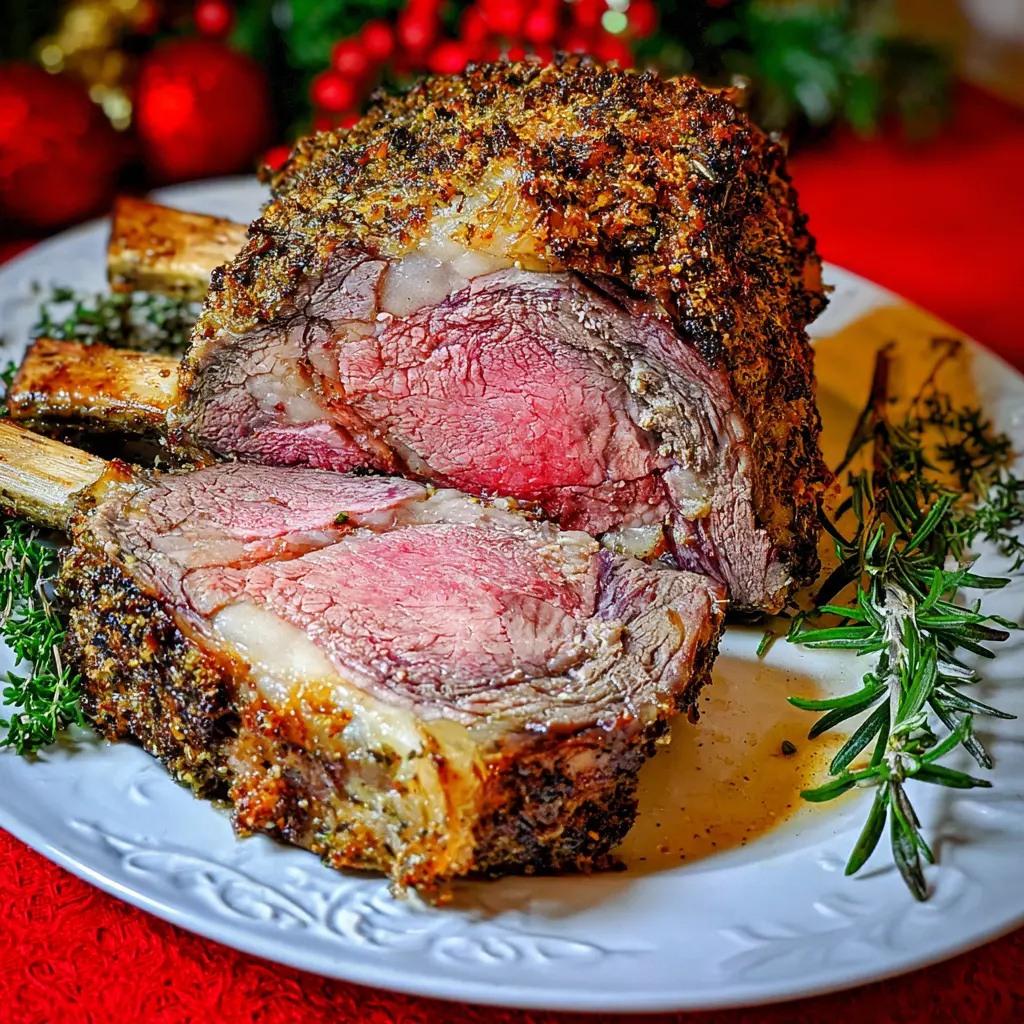
The Perfect Prime Rib Roast: A Family Recipe for Holiday Gatherings
Equipment
- roasting pan with rack
- Large mixing bowl
- plastic wrap
- meat thermometer Instant-read recommended
- aluminum foil
- Fat separator
- Small pot or sauté pan
Ingredients
- 1 lb bone-in prime rib roast (adjust for number of servings)
- 0.33 medium onion, sliced (per lb of roast)
- 1 tsp kosher or coarse sea salt (per lb)
- 0.5 tsp freshly ground black pepper (per lb)
- 1 tsp minced garlic (per lb)
- 1 tsp fresh rosemary, chopped (per lb)
- 1 tsp fresh thyme leaves (per lb)
- 0.5 tsp olive oil (per lb)
- 0.5 cup hot water (for roasting pan after initial bake)
Instructions
- Rinse the roast and pat it completely dry. Place onions in the bottom of a roasting pan with a rack. Mix salt, pepper, garlic, rosemary, thyme, and olive oil into a paste and rub all over the roast.
- Cover with plastic wrap and refrigerate for 8–24 hours to allow flavors to penetrate.
- Remove roast from fridge 2 hours before baking. Preheat oven to 450°F. Place roast fat-side up on rack over onions. Roast for 30 minutes.
- After 30 minutes, pour 1/2 cup hot water into pan. Rotate roast 180°, roast another 30 minutes at 450°F.
- Reduce oven to 350°F. Continue roasting, basting every 30 minutes. Add more water as needed if pan dries.
- Cook until internal temperature reaches 125°F for medium-rare, or adjust based on preferred doneness.
- Transfer roast to cutting board, tent with foil, and let rest 20 minutes to redistribute juices.
- Strain pan juices, discard onions. Use fat separator, then gently heat juices in a small pot for au jus.
- Slice the roast against the grain and serve warm with au jus or horseradish sauce.