Skip to content
Embrace the festive cheer with a recipe for homemade gingerbread syrup! This delightful syrup brings the warm, spicy notes of gingerbread right into your home. It is incredibly easy to make, using simple, fresh ingredients you likely already have. Get ready to elevate your drinks and desserts with this versatile, aromatic creation.
Why You’ll Love This Gingerbread Syrup
You will quickly discover why this homemade gingerbread syrup becomes a seasonal favorite:
- Achieve an authentic, rich gingerbread flavor.
- Prepare this delightful syrup quickly and simply.
- Avoid artificial additives often found in store-bought versions.
- Use it in many versatile applications, from coffee to cocktails.
- It makes thoughtful and personal holiday gifts.
- Save money compared to purchasing commercial syrups.
Ingredients You’ll Need
To make this delightful homemade gingerbread syrup, gather your ingredients. We use whole spices for the best flavor infusion.
- 2 cups water
- 2 cups brown sugar (light or dark, see notes)
- 2 cinnamon sticks (about 3 inches long each)
- 8 allspice berries
- 6 whole cloves
- 1 fresh ginger (inch long, about 40 grams), peeled and sliced
Yield: About 2.2 cups (~18 oz)
Prep time: 5 minutes
Cook time: 25 minutes
Notes & Substitutions
You can use either light or dark brown sugar for this recipe. Dark brown sugar provides a deeper molasses flavor, while light brown sugar offers a milder sweetness. For the ginger, fresh ginger is highly recommended for its vibrant taste. If you only have dried ginger, use about 1 teaspoon of ground ginger per inch of fresh, but note the flavor will be less bright. Feel free to swap out some whole spices; try adding a few cardamom pods or a star anise for different aromatic notes. A splash of vanilla extract (about 1 teaspoon) added after the syrup cools can also enhance its warmth.
Equipment
You won’t need many specialized tools for this recipe. Gather these basic kitchen items to get started:
- Medium saucepan or pot (preferably wide for better infusion)
- Fine-mesh sieve or strainer
- Measuring cups and spoons
- Sterilized glass bottle or jar for storage
- Whisk or wooden spoon
Step-by-Step Instructions
Making your own homemade gingerbread syrup is a rewarding process. Follow these simple steps for a perfect batch every time.
- Prepare Ingredients: Start by peeling the fresh ginger root. Then, slice it into thin rounds. Gather your whole cinnamon sticks, allspice berries, and whole cloves.
- Combine Liquids: Add the measured water and brown sugar into a medium-sized saucepan. A wider saucepan helps the liquid reduce slightly faster and exposes more surface area for spice infusion.
- Dissolve Sugar: Place the saucepan over medium heat. Stir the mixture occasionally with a whisk or wooden spoon. Continue stirring until all the brown sugar completely dissolves into the water, creating a smooth liquid.
- Bring to Boil: Increase the heat slightly and bring the sugar-water mixture to a gentle boil. This step helps to start the syrup formation and ensures the sugar is fully incorporated.
- Add Spices: Once the mixture boils, reduce the heat immediately to a low simmer. Carefully add the sliced fresh ginger, cinnamon sticks, allspice berries, and whole cloves to the simmering liquid.
- Simmer & Infuse: Allow the syrup to simmer gently for approximately 20 to 25 minutes. During this time, the spices will slowly release their fragrant oils, infusing the syrup with the classic gingerbread flavor. Maintain a very low simmer to avoid over-reduction.
- Taste Test: After 20 minutes, carefully spoon a small amount of the syrup and let it cool slightly before tasting. If you desire a stronger spice flavor, continue simmering for another 5-10 minutes, checking the flavor again.
- Cool Slightly: Once the desired flavor strength is achieved, remove the saucepan from the heat. Let the syrup sit and cool briefly in the pot, allowing the spices to infuse just a little longer as the temperature drops.
- Strain Syrup: Place a fine-mesh sieve or strainer over a heat-proof bowl or directly over your sterilized storage bottle. Carefully pour the warm syrup through the sieve, separating the liquid from the solid spices.
- Discard Solids: Discard all the spent ginger slices, cinnamon sticks, allspice berries, and cloves left in the sieve. Their flavor has now transferred to the syrup.
- Cool Completely: Allow the strained syrup to cool down completely to room temperature. This step is crucial before bottling; warm syrup can create condensation and potentially reduce shelf life in storage.
- Bottle & Store: Once fully cooled, transfer the homemade gingerbread syrup into a clean, sterilized glass bottle or jar with an airtight lid.
Pro Tips for Perfect Gingerbread Syrup
Achieve the best results with your homemade gingerbread syrup by following these expert tips:
- Use fresh, high-quality whole spices for the most vibrant and authentic flavor. Older spices lose their potency.
- Avoid over-simmering the syrup. Reducing it too much will result in a thicker, overly concentrated syrup.
- Adjust the spice level to your personal preference. Add more or less of any individual spice.
- Ensuring proper sterilization of your storage containers is key to prolonging the syrup’s shelf life and safety.
- Do not skip the full cooling process before bottling. This prevents condensation and keeps your syrup fresh.
- Consider using a wider saucepan; it allows for faster evaporation and more efficient spice infusion.
Serving Suggestions, Storage, & Variations
This versatile homemade gingerbread syrup is perfect for countless applications.
Serving Ideas
- Stir into your morning coffee or lattes for a festive twist.
- Sweeten your favorite tea or hot chocolate during colder months.
- Enhance festive cocktails or delightful mocktails with its warm spice.
- Drizzle generously over pancakes, waffles, or a bowl of oatmeal.
- Top ice cream, yogurt, or other baked goods for added flavor.
- Package it beautifully as thoughtful and delicious homemade food gifts for friends and family.
Storage Instructions
Store your homemade gingerbread syrup in an airtight, sterile container. Keep it refrigerated for optimal freshness and to prevent spoilage. When stored correctly, your syrup will last for approximately 2 to 3 weeks. Always check for any signs of mold or off-smells before using.
Flavor Variations
- Add a few strips of orange zest or a teaspoon of orange extract during simmering for a citrusy note.
- Introduce 2-3 black peppercorns to the simmering stage for a subtle, peppery kick.
- Experiment with adding one or two star anise pods for a hint of licorice-like flavor.
- For a less sweet syrup, you can slightly reduce the brown sugar to 1.5 cups, but note this may also slightly affect the syrup’s thickness.
Nutrition Information
This estimated nutrition information for your homemade gingerbread syrup is based on 1 tablespoon (15ml) serving. Please note these values are approximations, as homemade recipes can vary.
| Nutrient | Amount Per Serving |
|---|---|
| Calories | ~55 kcal |
| Total Fat | 0g |
| Sodium | 0mg |
| Total Carbs | ~14g |
| Sugars | ~14g |
| Protein | 0g |
Disclaimer: These are estimated nutritional values and may vary based on specific ingredient brands and preparation methods.
Frequently Asked Questions (FAQ)
Can I use ground spices instead of whole spices?
You can, but whole spices provide a cleaner, richer flavor and easier straining. If using ground spices, use about 1 teaspoon of ground ginger, 1/2 teaspoon ground cinnamon, and 1/4 teaspoon each of ground allspice and cloves. Strain carefully with cheesecloth to avoid a cloudy syrup.
How long does gingerbread syrup last?
This homemade gingerbread syrup keeps well in the refrigerator for about 2 to 3 weeks in an airtight, sterilized container. Always check for freshness before using.
What can I use gingerbread syrup for?
It is incredibly versatile! Enjoy it in coffee, lattes, tea, hot chocolate, or even cocktails. You can also drizzle it over pancakes, waffles, oatmeal, or desserts like ice cream.
Can I make this syrup less sweet?
Yes, you can reduce the amount of brown sugar slightly, for example, to 1.5 cups. However, this may result in a slightly thinner syrup, as sugar contributes to the syrup’s body and consistency.
Is it safe to freeze gingerbread syrup?
While you can technically freeze it, the texture might change slightly upon thawing. We recommend storing it in the refrigerator for the best quality and flavor, given its decent shelf life.
Conclusion
Creating homemade gingerbread syrup is a simple yet incredibly rewarding way to bring festive cheer into your home. This recipe offers authentic flavor, using fresh, wholesome ingredients without any artificial additives. It’s perfect for busy parents and beginners alike. Whip up a batch for yourself, enjoy its versatility in countless drinks and dishes, or share it as a thoughtful gift. Get ready to enjoy your delicious, homemade syrup!
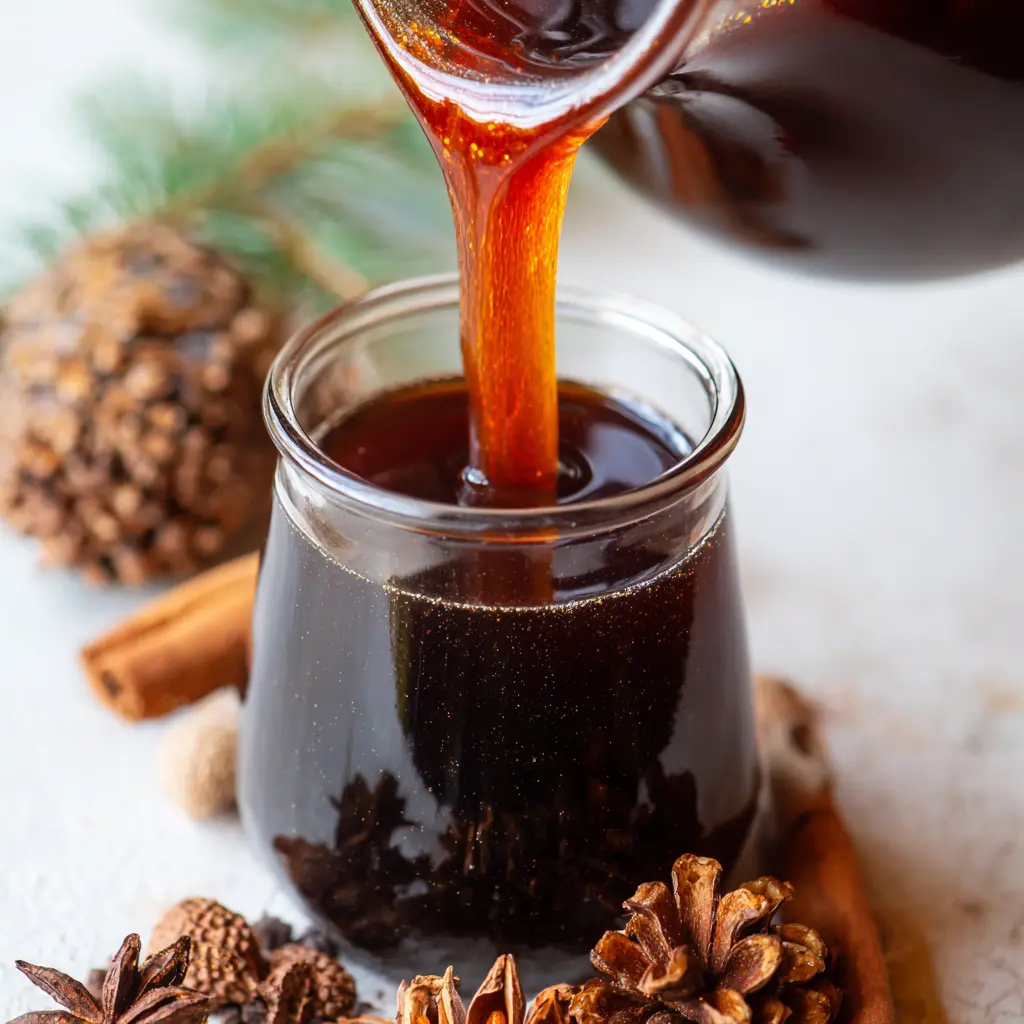
The Best Homemade Gingerbread Syrup Recipe
Equipment
- medium saucepan Wide-bottomed preferred for better infusion
- Fine-mesh sieve or strainer
- measuring cups and spoons
- Whisk or wooden spoon To stir syrup
- Sterilized bottle or jar For storing finished syrup
Ingredients
- 2 cups water
- 2 cups brown sugar (light or dark)
- 2 cinnamon sticks (3-inch)
- 8 allspice berries
- 6 whole cloves
- 1 inch fresh ginger, peeled & sliced (~40g)
Instructions
- Peel and thinly slice the fresh ginger. Gather cinnamon sticks, cloves, and allspice berries.
- In a medium saucepan, combine water and brown sugar. Stir over medium heat until sugar dissolves completely.
- Bring the mixture to a gentle boil, then reduce heat to a low simmer.
- Add the ginger slices, cinnamon sticks, allspice berries, and cloves to the saucepan.
- Simmer gently for 20–25 minutes, stirring occasionally. Taste and simmer longer if more spice is desired.
- Remove from heat and let sit for a few minutes to cool slightly and deepen flavor.
- Strain syrup through a fine-mesh sieve into a heatproof bowl or bottle to remove solids.
- Allow syrup to cool completely before bottling to prevent condensation.
- Transfer cooled syrup to sterilized glass bottles or jars. Seal and refrigerate.