Skip to content
Step into the festive spirit with homemade Pandoro (Italian Christmas Cake), an iconic sweet bread from Verona. This golden, star-shaped delight is more than just a dessert; it is a symbol of holiday cheer. With its delicate vanilla aroma and soft, tender crumb, traditional Pandoro captures the essence of an Italian Christmas. Embrace the rewarding tradition of baking this beautiful, celebratory cake from scratch.
Why You’ll Love This Pandoro Recipe
You will adore this Pandoro recipe for its exquisite flavor and incredibly tender texture. It delivers a rich, buttery taste with a delicate hint of vanilla that melts in your mouth. The impressive star shape makes for a stunning centerpiece on any holiday table, sure to wow your guests. Master an authentic Italian Christmas tradition, bringing a touch of Verona into your home. The entire baking process is incredibly rewarding, culminating in a beautiful, homemade masterpiece.
What is Pandoro?
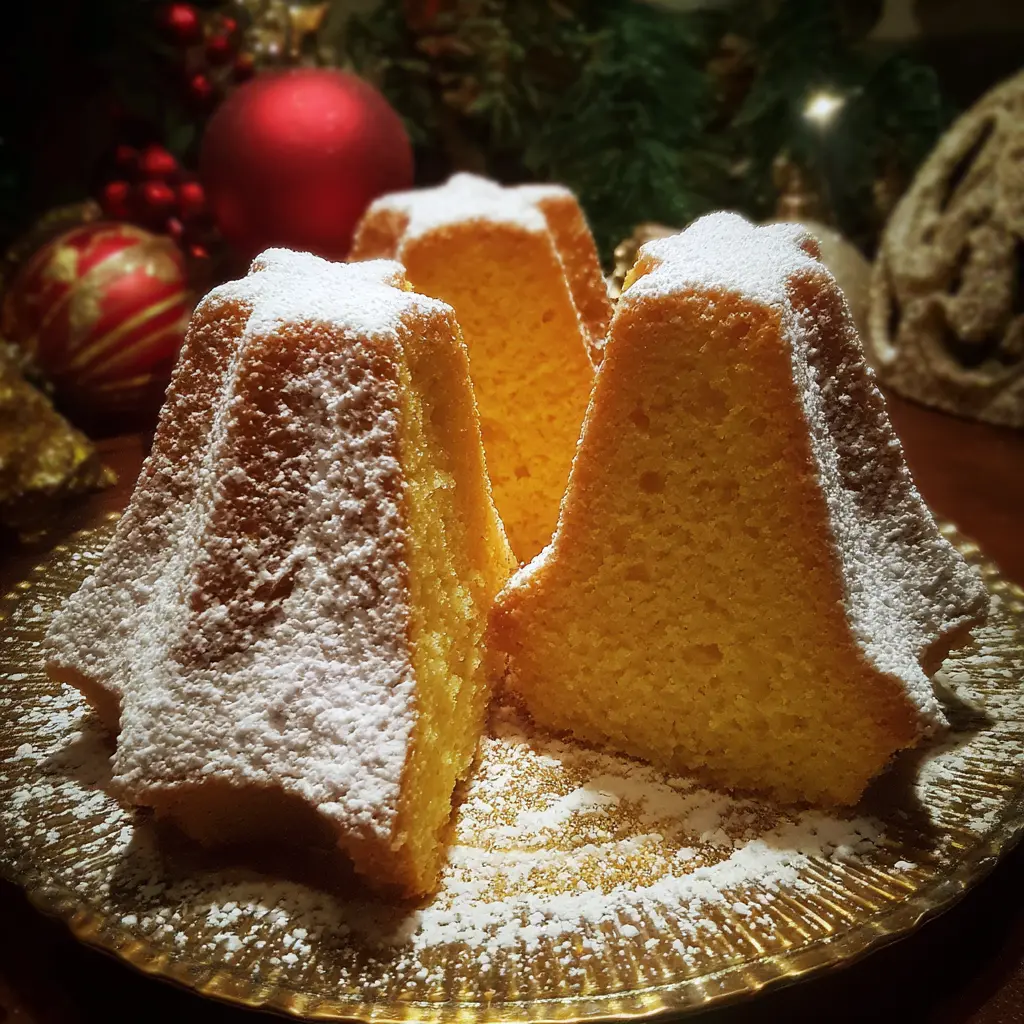
Pandoro, meaning “golden bread,” is a traditional Italian sweet bread originating from Verona. This iconic Christmas cake is instantly recognizable by its distinctive frustum shape, an eight-pointed star. Bakers traditionally dust Pandoro with a generous coating of powdered sugar, resembling snow-capped mountains. The rich yellow color comes from the abundance of egg yolks in the dough.
Historically, Pandoro evolved from a medieval Veronese dessert called Nadalin, maintaining its focus on simplicity and pure, buttery flavor, making it a beloved holiday staple across Italy. Learn more about the history of Pandoro and its ancestor Nadalin.
Pandoro vs. Panettone: What’s the Difference?
While both Pandoro and Panettone are beloved Italian Christmas cakes, they offer distinct experiences. The primary difference lies in their ingredients: Pandoro contains no candied fruit or raisins, focusing purely on a rich, buttery, vanilla flavor. Panettone, conversely, is famous for its fruit inclusions. Their shapes also differ significantly; Pandoro is a star, while Panettone is typically a tall, cylindrical dome. The classic Pandoro boasts a soft, brioche-like texture, whereas Panettone can be slightly chewier due to its mix-ins. Both are incredible, so try them both to pick your favorite!
Ingredients for Homemade Pandoro (Italian Christmas Cake)
Crafting your homemade Pandoro (Italian Christmas Cake) begins with high-quality ingredients. They elevate the flavor and texture of this traditional Veronese treat.
For the Starter Dough:
- 1/4 cup plus 1 tablespoon lukewarm water
- 1/2 teaspoon active dry yeast
- 1 teaspoon sugar
- 3/4 cup all-purpose flour
- 1/2 teaspoon salt
For the Main Dough:
- 1/2 cup lukewarm whole milk
- 2 1/2 teaspoons active dry yeast
- 2 3/4 cup all-purpose flour
- 1/2 cup sugar
- 4 large egg yolks
- 12 tablespoons unsalted butter (softened at room temp)
- 2 tablespoons honey
- 2 tablespoons vanilla bean paste
- zest of one lemon
Notes & Substitutions
Use high-quality unsalted butter and fresh egg yolks for the best color and richness in your Pandoro. Vanilla bean paste offers a more intense flavor than extract; however, you can substitute with 1 tablespoon of good quality vanilla extract if needed. For a dairy-free option, use plant-based milk and butter substitutes, though this may slightly alter the texture. If using bread flour instead of all-purpose, adjust liquid amounts slightly as it absorbs more.
Equipment You’ll Need
To make this delightful Pandoro, a traditional 9-cup (2-liter capacity) Pandoro mold is ideal for achieving its signature star shape. If you do not have one, a Bundt pan or a deep pound cake pan makes a suitable alternative. An electric stand mixer with a dough hook attachment is essential for proper kneading. You will also need large mixing bowls, measuring cups, spoons, and a reliable kitchen thermometer to ensure accurate dough temperature and doneness.
Step-by-Step Pandoro Instructions
Creating your amazing Pandoro (Italian Christmas Cake) is a labor of love, but each step is straightforward. Follow these instructions carefully for a beautiful and delicious result.
Making the Starter Dough
First, activate the yeast for your starter. Dissolve the 1/2 teaspoon yeast and 1 teaspoon sugar in 1/4 cup plus 1 tablespoon lukewarm water. Let it sit for 10-15 minutes until it becomes nice and frothy, indicating the yeast is active. Place the 3/4 cup all-purpose flour and 1/2 teaspoon salt in the bowl of a stand mixer. Add the yeast mixture. Using the dough hook, knead the ingredients until they combine into a smooth yet firm and stiff dough. Form the dough into a ball, place it in a lightly greased bowl, cover loosely with plastic wrap, and let it rise in a warm place for about 2 hours, or until nearly doubled in size. Punch the dough down gently, form it into a ball again, place it back in the bowl, cover tightly with plastic wrap, and refrigerate it overnight. This slow rise develops deep flavors. Remember to remove the dough from the fridge two hours before you plan to make the main dough the next day.
Preparing the Main Dough
The next day, prepare your main dough. Dissolve the 2 1/2 teaspoons yeast and 1 teaspoon sugar in 1/2 cup lukewarm milk; let it sit for 10-15 minutes until frothy. In a stand mixer bowl, combine 2 3/4 cups all-purpose flour, 1/2 cup sugar, and the yeast mixture. Mix with a spoon or the dough hook until just combined. Add the four large egg yolks one at a time, kneading thoroughly with the dough hook after each addition. The mixture will transform into a rich yellow dough. Incorporate the overnight starter dough into the mixer. Knead both doughs together for about 5 minutes until well combined. Next, add the 12 tablespoons softened unsalted butter, lemon zest, 2 tablespoons vanilla bean paste, and 2 tablespoons honey. Continue kneading for about 10 minutes, scraping down the sides of the bowl as needed. The dough should become very smooth, elastic, and not overly sticky. If it feels too sticky, add a little more flour, one tablespoon at a time. Form the dough into a ball, lightly spray the bowl, and place the dough back in. Cover loosely with plastic wrap and let it rise in a warm place for about 3 hours, or until it has nearly tripled in size. Gently punch the dough down.
Baking the Pandoro
Generously butter your Pandoro mold pan, ensuring you get into all the cracks and crevices. A 9-cup capacity mold (about 2 liters) works best. Next, add some flour to the pan and shake it vigorously to coat it thoroughly, tapping out any excess. This double-layer ensures your Pandoro does not stick. Place the dough into the prepared mold. Cover loosely with plastic wrap and let it rise in a warm place until the dough has risen about an inch or so above the top of the mold. In the meantime, preheat your oven to 325°F (160°C). Bake the Pandoro on the middle rack for 30 minutes. Reduce the oven temperature to 300°F (150°C) and continue baking for another 30 minutes. Check for doneness by inserting a kitchen thermometer into the center; it should read 195°F (90°C). A toothpick inserted into the middle should also come out clean. Be careful not to over-bake, as this will make your Pandoro dry. If your Pandoro starts to brown too quickly during baking, cover it loosely with aluminum foil. Let the Pandoro cool in the mold on a wire rack for 15 minutes. Then, carefully remove it from the mold. Cut a thin layer off the base so it sits flat on a serving plate.
Serving Your Pandoro
Once your Pandoro is completely cool, dust it generously with powdered sugar for a classic presentation. For traditional slices, cut the bread vertically. For a more festive and impressive “Christmas tree” effect, slice the Pandoro into thick horizontal rings, then rotate each slice slightly as you stack them. You can then dust this tiered structure with powdered sugar, or layer each horizontal slice with custard, cream, or a filling of your choice for an extra treat.
Pro Tips for the Perfect Pandoro
Achieve the perfect Pandoro by starting with all ingredients at room temperature; this ensures smooth mixing and consistent rising. Always maintain a warm, draft-free environment for the dough to rise effectively, which is crucial for its airy texture. Do not over-bake the cake; precise timing prevents dryness and keeps the crumb tender. Properly grease and flour your mold, getting into every crevice, to guarantee easy release and preserve that iconic star shape. Most importantly, be patient with the rising times; great flavor and texture come from allowing the dough to develop naturally.
Serving, Storage, and Variations
Serving Suggestions
Beyond a simple dusting of powdered sugar, your Pandoro pairs wonderfully with various accompaniments. Serve slices alongside a rich mascarpone cream, a light zabaglione, or a silky vanilla custard. Enjoy it with a hot cup of coffee, a comforting tea, or a festive drink. For an indulgent treat, drizzle slices with melted chocolate or a decadent hard sauce. You can also toast stale slices and serve them French toast style.
Storage Instructions
Store your homemade Pandoro at room temperature in an airtight container or tightly wrapped in plastic wrap. It stays fresh for up to 3-5 days. You will know it is stale if the crumb becomes noticeably dry and firm. For longer storage, freeze individual slices or the whole Pandoro tightly wrapped in plastic wrap, then foil, for up to 3 months. Thaw at room temperature before serving.
Creative Variations
Transform your classic Pandoro with exciting variations. To make a chocolate Pandoro, fold in chocolate chips or cocoa powder into the main dough. Infuse the cake with liqueurs like rum or Grand Marnier by brushing them onto the warm cake after baking. For a truly decadent treat, slice the Pandoro horizontally and fill the layers with fruit jam, tangy lemon curd, or rich Nutella before reassembling.
Nutrition Information
Here is an estimated nutritional breakdown per serving of Pandoro (Italian Christmas Cake). Please note that exact values can vary based on specific ingredients and preparation methods.
| Nutrient | Amount Per Serving |
|---|---|
| Calories | 350-400 kcal |
| Total Fat | 18-22 g |
| Saturated Fat | 10-12 g |
| Cholesterol | 120-140 mg |
| Sodium | 150-180 mg |
| Total Carbs | 40-45 g |
| Dietary Fiber | 1-2 g |
| Total Sugars | 15-20 g |
| Protein | 7-9 g |
Frequently Asked Questions (FAQ)
Can I use a Bundt cake pan if I don’t have a Pandoro mold? Yes, absolutely! A 9-cup capacity Bundt pan or a deep pound cake pan works as a suitable alternative if you do not have a traditional Pandoro mold.
What gives Pandoro its distinctive yellow color? The rich golden yellow color of Pandoro comes primarily from the generous amount of egg yolks used in the dough. These yolks impart both color and flavor.
How can I tell if my Pandoro is perfectly baked? Your Pandoro is perfectly baked when its internal temperature reaches 195°F (90°C) and a toothpick inserted into the center comes out clean. Avoid over-baking to prevent dryness.
How long does homemade Pandoro stay fresh? Homemade Pandoro stays fresh for 3-5 days when stored properly at room temperature in an airtight container or tightly wrapped. You can also freeze it for up to 3 months.
Can I prepare Pandoro dough in advance? Yes, you can prepare the starter dough the day before and let it ferment overnight in the refrigerator. This develops deeper flavors and simplifies the baking schedule.
Conclusion
Baking your own homemade Pandoro (Italian Christmas Cake) is a truly enchanting experience, filling your kitchen with festive aromas. This iconic star-shaped Italian sweet bread, with its delicate vanilla and rich buttery flavor, promises to be a show-stopping centerpiece for your holiday celebrations. Embrace this wonderful tradition and savor the joy of sharing a slice of Italy with loved ones. We encourage you to try this recipe and share your baking success with Lily Hanna!
Equipment
- stand mixer with dough hook
- large mixing bowls
- measuring cups and spoons
- kitchen thermometer
- plastic wrap
- Pandoro mold or Bundt pan (9-cup)
- pastry brush (for buttering pan)
- cooling rack
Ingredients
- 1/4 cup lukewarm water
- 1 tbsp lukewarm water
- 1/2 tsp active dry yeast (starter)
- 1 tsp sugar (starter)
- 3/4 cup all-purpose flour (starter)
- 1/2 tsp salt (starter)
- 1/2 cup lukewarm whole milk
- 2 1/2 tsp active dry yeast (main dough)
- 2 3/4 cups all-purpose flour (main dough)
- 1/2 cup sugar (main dough)
- 4 large egg yolks
- 12 tbsp unsalted butter, softened
- 2 tbsp honey
- 2 tbsp vanilla bean paste
- 1 zest of 1 lemon
- powdered sugar (for dusting)
Instructions
- Dissolve 1/2 tsp yeast and 1 tsp sugar in 1/4 cup + 1 tbsp lukewarm water. Let sit 10-15 minutes until frothy.
- In mixer bowl, combine 3/4 cup flour and 1/2 tsp salt. Add yeast mixture and knead into a stiff dough.
- Form into a ball, place in greased bowl, cover, and let rise in warm place for 2 hours.
- Punch down dough, reform into ball, cover, and refrigerate overnight. Remove 2 hours before using.
- Dissolve 2 1/2 tsp yeast and 1 tsp sugar in 1/2 cup lukewarm milk. Let sit 10-15 minutes.
- In stand mixer, combine 2 3/4 cups flour, 1/2 cup sugar, and the yeast-milk mixture. Mix briefly.
- Add egg yolks one at a time, kneading after each addition.
- Incorporate the overnight starter dough. Knead for 5 minutes.
- Add softened butter, honey, vanilla paste, and lemon zest. Knead for 10 minutes until smooth and elastic.
- Form dough into a ball, place in greased bowl, cover, and let rise for about 3 hours until tripled.
- Punch down dough gently.
- Generously butter and flour a Pandoro mold. Add dough, cover, and let rise until 1 inch above rim.
- Preheat oven to 325°F (160°C). Bake for 30 minutes. Lower heat to 300°F (150°C) and bake another 30 minutes.
- Check doneness with thermometer (195°F / 90°C) or clean toothpick. Tent with foil if browning too fast.
- Cool in mold for 15 minutes. Unmold and trim base if needed to sit flat.
- Dust completely cooled Pandoro with powdered sugar before serving.