Skip to content
Making your own homemade vegan butter might seem daunting, especially if you have ever tried a recipe that yields a rock-hard block instead of something wonderfully spreadable. I understand the frustration of tearing through your toast! But what if I told you there is a simple secret to achieving perfectly creamy, spreadable vegan butter every single time? This recipe will show you exactly how to create a dairy-free, plant-based butter that is ideal for spreading, baking, and frying, making your vegan kitchen experience even more delightful.
Why You’ll Love This Recipe
I am thrilled to share my recipe for homemade vegan butter with you, especially because it solves the biggest problem I used to face: rock-hard butter straight from the fridge. My unique twist is the inclusion of just 1/2 teaspoon of liquid sunflower lecithin. This ingredient is a game-changer for enhanced emulsification and ensures your butter remains consistently smooth and spreadable, even when it is cold.
Lecithin works by preventing the oils and water from separating, creating a stable emulsion that mimics the phospholipid content found in traditional butter. This means you get a much closer experience to conventional dairy butter.
Here are the key benefits you will adore:
Reliability: This recipe consistently produces perfect results.
Easy to Spread: Say goodbye to tearing your bread. This vegan butter is wonderfully soft.
Versatile: It performs beautifully whether you are spreading it on toast, using it in your baking, or frying your favorite vegetables.
Ingredients Needed

Here are the ingredients I use for this Homemade Vegan Butter:
1 cup Refined Coconut Oil ((240ml) Melted*)
2 Tbsp Canola Oil (See Notes*)
⅓ cup Unsweetened Soy Milk (or Almond Milk (80ml))
1 tsp Apple Cider Vinegar
1 tsp Nutritional Yeast
1 Small Pinch Turmeric
½ tsp Salt
½ tsp Liquid Sunflower Lecithin
Ingredient Notes & Substitutions
Refined Coconut Oil: It is crucial to use refined coconut oil for this recipe. Refined coconut oil has a neutral flavor, ensuring your homemade vegan butter does not taste like coconut. Extra virgin coconut oil will impart a distinct coconut flavor, which is usually not what we want in butter. This is a non-negotiable for achieving a neutral taste.
Canola Oil: I recommend canola oil for its neutral flavor and good texture. However, you can substitute it with other neutral-tasting liquid oils like avocado oil or olive oil. If you choose to use olive oil, add it at the very end of the blending process and stir gently to avoid any potential bitterness from prolonged blending.
Unsweetened Soy Milk/Almond Milk: These two plant-based milks are interchangeable in this recipe. I find they work best due to their protein and fat content. Other plant-based milks might not curdle as effectively or provide the same texture, so I recommend sticking to soy or almond for optimal results.
Apple Cider Vinegar: This ingredient is essential for creating vegan buttermilk. When combined with the plant milk, the acidity of the apple cider vinegar causes the milk proteins to curdle slightly, thickening it and adding a subtle tang that contributes to the overall buttery flavor.
Nutritional Yeast: This is a secret weapon for adding a cheesy, umami depth that significantly enhances the buttery taste. There is really no good substitution for nutritional yeast if you want that classic flavor.
Sunflower Lecithin: Do not skip this! Liquid sunflower lecithin is the key to achieving that perfectly spreadable texture and preventing separation. Powdered lecithin is not recommended for this recipe as it can behave differently.

How to Make Homemade Vegan Butter
Making your own plant-based butter is incredibly satisfying, and with these steps, you will have a perfect batch every time.
Phase 1: Combine the Oils
First, add the melted refined coconut oil to your blender jug along with the canola oil. The melted coconut oil should be clear and smooth. It is important that the coconut oil is fully melted but not hot. Aim for a temperature of around 75-80°F (24-27°C) for optimal blending.
Phase 2: Prepare the Vegan Buttermilk
In a separate small bowl, add the apple cider vinegar to the unsweetened soy or almond milk. Stir it gently. You will notice the milk will slightly curdle and become thicker, forming a vegan buttermilk. Once it has curdled, add this buttermilk mixture to the blender with the oils.
Phase 3: Add Flavor and Emulsifier
Next, add the nutritional yeast, a small pinch of turmeric, and the salt to the blender. Now, add the star ingredient: the liquid sunflower lecithin.
Phase 4: Blend Until Smooth
Blend the mixture very well until it is completely smooth and emulsified. This may take a few minutes, depending on the power of your blender. Continue blending until there are no visible oil droplets and the mixture has a uniform, creamy consistency. A high-speed blender works best here.
Phase 5: Set and Chill
Pour the blended mixture out into a butter dish or, for easy removal, a silicone butter mold. Refrigerate it until it is completely set. This usually takes approximately 2-4 hours, or until it is firm to the touch.
Phase 6: Prepare for Use
When you are ready to use your homemade vegan butter, remove it from the fridge to thaw for a few minutes. This allows it to soften slightly, making it ideal for spreading on fresh bread or creaming with sugar for baking.
Getting the Perfect Texture
Achieving the perfect texture for your homemade vegan butter is all about understanding the role of emulsification and oil ratios. The sunflower lecithin is crucial for this. It acts as a bridge between the oil and water components, creating a stable emulsion that keeps your butter smooth and spreadable. Without it, the butter might separate, especially as it chills.
The combination of oils also plays a big part. Using more canola oil or avocado oil in proportion to the refined coconut oil will result in a softer, more pliable butter, even when cold. Experimenting with these ratios can help you find your ideal spreadability.
Troubleshooting Butter Texture
If your butter does not set properly: First, ensure your refined coconut oil was fully melted before blending. Incomplete melting can lead to a grainy or separated texture. Second, a higher-powered blender helps create a strong emulsion; if you are using a less powerful blender, blend for a longer duration. Lastly, double-check that your fridge is cold enough to properly chill and solidify the mixture.
If your butter separates: This often means the emulsion broke. Ensure you added the sunflower lecithin and blended the mixture thoroughly until completely smooth. If you notice separation after refrigeration, you can sometimes salvage it by re-blending the mixture until smooth, then immediately refrigerating it again.
Pro Tips & Troubleshooting
Making homemade vegan butter is an art, and I have learned a few tricks along the way to ensure success every time.
Pro Tips
* Always use refined coconut oil for a truly neutral flavor. Extra virgin coconut oil will give your butter a noticeable coconut taste.
* If you decide to use olive oil as a substitute for canola or avocado oil, add it at the very end of the blending process and stir it in gently. This helps to avoid any bitterness that can develop from blending olive oil vigorously for too long.
* For the best spreadability or creaming results in baking, always soften the butter slightly at room temperature for a few minutes before using it.
* If you prefer a softer homemade vegan butter, especially one that is more spreadable straight from the fridge, increase the amount of liquid oil like canola or avocado oil slightly.
* To avoid a luminous, unnatural yellow color, use only a small pinch of turmeric. Its primary role is just to provide a subtle buttery hue.
* A high-speed blender will give you the best, most consistent emulsification and a super smooth final product.
* Make sure your refined coconut oil is completely melted before you start blending to ensure a smooth, uniform consistency.
Common Mistakes to Avoid
* Using extra virgin coconut oil is a common mistake. It will result in your homemade vegan butter tasting like coconut and can sometimes lead to a lard-like appearance after it has been stored for about a week.
* Blending olive oil for an extended period can impart a bitter taste to your vegan butter. As mentioned, add it last and blend minimally.
* Not using enough sunflower lecithin, or omitting it entirely, is a major cause of separation, where the oils and water components of your butter split.
* Adding too much turmeric, for example, a quarter teaspoon, can give your butter an overly bright and unnatural luminous yellow color. A small pinch is truly all you need.
Serving & Storage
Once you have made your delicious batch of homemade vegan butter, you will find it incredibly versatile in the kitchen.
Serving Ideas
* Spread it generously on fresh bread or toast for a simple yet satisfying treat.
* It is fantastic for all kinds of baking projects. Think vegan oatmeal cookies, chocolate chip cookies, rich pound cake, apple crisp, or gooey cinnamon rolls.
* Use it for frying your favorite vegetables, like sautéed mushrooms with spring onions, to add a rich, buttery flavor.
* Whip up some savory vegan garlic bread for an easy appetizer or side dish.
Storage and Make-Ahead
Your homemade vegan butter will keep well for up to 2 weeks in the fridge. For the best quality and flavor, I recommend enjoying it within 10-12 days.
If you have made a larger batch or want to keep some on hand for later, you can freeze excess butter for longer storage. To freeze, wrap the block tightly in plastic wrap, ensuring no air can get to it, then wrap it again in aluminum foil. This double layer protects it from freezer burn. Thaw your frozen vegan butter in the fridge overnight before you plan to use it.
Conclusion
There you have it: a straightforward and reliable recipe for homemade vegan butter that is wonderfully spreadable, dairy-free, and incredibly versatile. The key to its success, as you now know, is the inclusion of sunflower lecithin, which ensures a consistently smooth and emulsified texture that addresses all the common challenges of making vegan butter at home.
I encourage you to experiment with different oil combinations if you wish to fine-tune the texture to your personal preference, perhaps making it even softer for specific uses. Even for beginners, this recipe is incredibly straightforward and yields fantastic results that will elevate your plant-based cooking and baking.
Try this recipe today and enjoy delicious, homemade vegan butter! Share your creations with us on social media!
FAQ
How long does homemade vegan butter last and can it be frozen?
Homemade vegan butter lasts up to 2 weeks in the fridge. Yes, it can be frozen for longer storage, typically up to 2 months.
What kind of oils are best for vegan butter and what can I substitute?
Refined coconut oil is essential for a neutral flavor and firm texture. For liquid oils, canola oil is great, but avocado oil or olive oil can be used as substitutes. If using olive oil, add it at the end to prevent bitterness from blending.
Why use refined coconut oil over extra virgin coconut oil?
Refined coconut oil has a neutral flavor, which is desirable for butter. Extra virgin coconut oil will impart a strong coconut taste, which usually is not preferred in a butter substitute.
What gives vegan butter its buttery flavor and color?
Nutritional yeast provides a cheesy, umami flavor that mimics traditional butter. A small pinch of turmeric is added to give it a natural yellow hue.
How can I make vegan butter spreadable straight from the fridge?
The addition of sunflower lecithin is crucial for keeping the butter spreadable even when cold. Additionally, using a slightly higher ratio of liquid oils like canola or avocado oil to refined coconut oil will result in a softer butter.
Can homemade vegan butter be used for baking and making flaky pastries?
Yes, this vegan butter can be used effectively for baking, including cookies and cakes. For flaky pastries like pie crusts or puff pastry, ensure the butter is very cold and firm before incorporating it into the dough.
Can I use coconut milk instead of soy milk/almond milk?
We do not recommend using coconut milk in this recipe. Its high fat content and different protein structure will not emulsify or curdle in the same way, which can negatively affect the final texture and consistency of the butter.
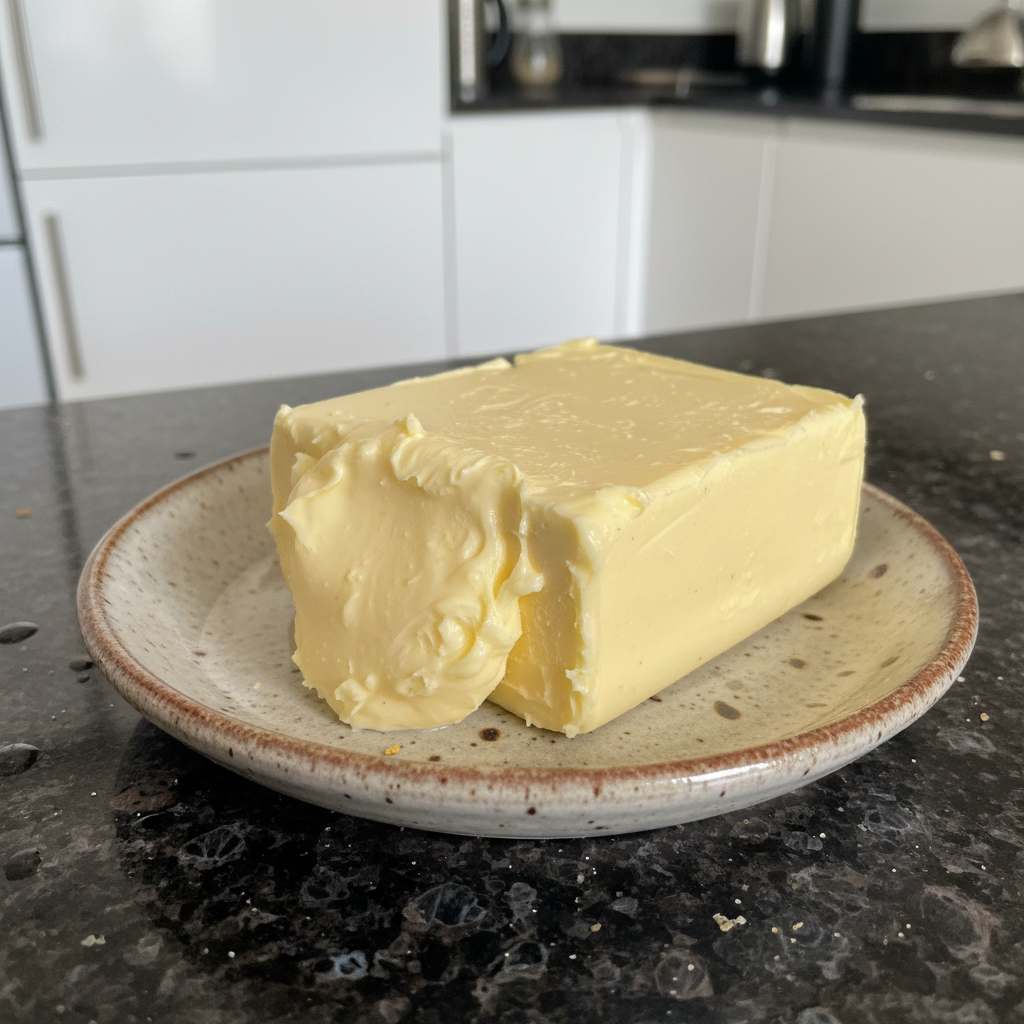
Easy Homemade Vegan Butter Recipe: Super Spreadable!
Equipment
- Blender
- small bowl
- Butter dish
- Silicone butter mold
Ingredients
- 1 cup Refined Coconut Oil (240ml) Melted
- 2 Tbsp Canola Oil See Notes
- ⅓ cup Unsweetened Soy Milk or Almond Milk (80ml)
- 1 tsp Apple Cider Vinegar
- 1 tsp Nutritional Yeast
- 1 Small Pinch Turmeric
- ½ tsp Salt
- ½ tsp Liquid Sunflower Lecithin
Instructions
Phase 1: Combine the Oils
- First, add the melted refined coconut oil to your blender jug along with the canola oil. The melted coconut oil should be clear and smooth. Ensure the coconut oil is fully melted but not hot, aiming for a temperature of around 75-80°F (24-27°C) for optimal blending.
Phase 2: Prepare the Vegan Buttermilk
- In a separate small bowl, add the apple cider vinegar to the unsweetened soy or almond milk. Stir gently. You will notice the milk will slightly curdle and become thicker, forming a vegan buttermilk. Once it has curdled, add this buttermilk mixture to the blender with the oils.
Phase 3: Add Flavor and Emulsifier
- Next, add the nutritional yeast, a small pinch of turmeric, and the salt to the blender. Now, add the star ingredient: the liquid sunflower lecithin.
Phase 4: Blend Until Smooth
- Blend the mixture very well until it is completely smooth and emulsified. This may take a few minutes, depending on the power of your blender. Continue blending until there are no visible oil droplets and the mixture has a uniform, creamy consistency. A high-speed blender works best here.
Phase 5: Set and Chill
- Pour the blended mixture out into a butter dish or, for easy removal, a silicone butter mold. Refrigerate it until it is completely set. This usually takes approximately 2-4 hours, or until it is firm to the touch.
Phase 6: Prepare for Use
- When you are ready to use your homemade vegan butter, remove it from the fridge to thaw for a few minutes. This allows it to soften slightly, making it ideal for spreading on fresh bread or creaming with sugar for baking.