Skip to content
After the grand feasts of Thanksgiving or Christmas, there’s always that wonderfully comforting thought: what to do with the treasured leftovers? For me, nothing beats transforming a glorious turkey carcass into a deeply nourishing, soul-satisfying bowl of homemade turkey soup. It’s the ultimate comfort food, a warm hug in a bowl that makes the most of every delicious morsel from your holiday bird. This isn’t just any leftover soup; I’m going to guide you through crafting a truly exceptional version, complete with my expert tips for making the richest turkey stock from scratch and a special flavor-boosting twist that will elevate your soup from simple to spectacular.
Why You’ll Love This Recipe
This isn’t your grandma’s turkey soup unless your grandma was a secret culinary genius! My version takes the classic and gives it a sophisticated upgrade that you’re going to adore absolutely.
The Unique Twist: I introduce a splash of dry white wine (think a crisp Sauvignon Blanc or even a dry sherry) to the sautéed vegetables. This isn’t just for show; it’s a brilliant way to deglaze the pan, unlocking all those caramelized, browned bits that cling to the bottom after sautéing. These bits are pure flavor magic, rich with the Maillard reaction, and the wine transforms them into a complex, savory base for your broth. Just before serving, a squeeze of fresh lemon juice cuts through the richness, providing a vibrant lift, while a generous sprinkle of fresh dill or chives adds a delicate, aromatic herbal note that complements the turkey beautifully without overpowering it, enhancing that fresh, bright taste.
Incredible Flavor & Depth: Thanks to the wine deglaze and the bright finish of lemon and fresh herbs, this turkey soup transcends basic. It’s a gourmet experience in a humble bowl, packed with layers of umami and aromatic complexity that will surprise and delight your palate.
Smart Leftover Utilization: Don’t let that turkey carcass go to waste! This recipe is the ultimate solution for Thanksgiving leftovers or Christmas dinner remnants. You’ll turn what might be discarded into a star meal, making the most of your ingredients and stretching your budget with a truly delicious, hearty creation.
Comforting & Nourishing: As the cooler months arrive, this winter soup is everything you crave. It’s hearty, deeply aromatic, and provides warmth from the inside out, truly embodying the spirit of comfort food that nourishes both body and soul.
Ingredients Needed

From a rich homemade stock to the vibrant finishing touches, here’s what you’ll need for this exquisite turkey soup.
- For the Turkey Stock:
- 1 turkey carcass, leftover from carving a whole turkey, including any leftover drippings or giblets (not the liver) if you have them
- Cold water
- 1 medium to large yellow onion, quartered or cut into thick wedges
- 1 to 2 carrots, roughly chopped (can include tops)
- 1 celery rib and some celery tops (roughly chopped)
- Several sprigs fresh parsley
- 1 to 2 sprigs fresh thyme, or 1 teaspoon dried thyme
- 1 bay leaf
- 5 to 10 peppercorns
- Kosher salt
- Freshly ground black pepper
- For the Turkey Soup:
- 1 to 2 tablespoons butter or turkey fat
- 1 to 1 1/2 cups chopped carrots
- 1 to 1 1/2 cups chopped onion
- 1 to 1 1/2 cups chopped celery
- 2 cloves garlic, minced
- 3 to 4 quarts of the turkey stock you just made
- A few sprigs fresh parsley leaves, chopped (2 to 4 tablespoons)
- 2 teaspoons poultry seasoning (more to taste), or a combination of ground sage, thyme, marjoram, and/or a bouillon cube
- Kosher salt and freshly ground black pepper to taste
- 4 to 8 ounces egg noodles or 1/2 to 1 cup dry rice (optional)
- 2 to 4 cups leftover turkey meat, chopped or shredded (don’t use any of the meat from making the stock)
- 1/4 cup dry white wine (such as Sauvignon Blanc or Pinot Grigio) or dry sherry (for deglazing)
- 1 tablespoon fresh lemon juice
- 2 tablespoons fresh dill or chives, chopped (for finishing)
Ingredient Notes & Substitutions
Turkey Carcass: The turkey carcass is the backbone of your homemade stock, providing incredible depth and umami. If you don’t have a turkey carcass, you can use a chicken carcass or high-quality store-bought chicken stock or broth, though homemade is always superior for flavor.
Fat for Sautéing: I love using rendered turkey fat, skimmed from your homemade stock, for sautéing the vegetables. It adds an unparalleled turkey flavor. Alternatively, butter or olive oil work beautifully.
Aromatics & Herbs: Fresh is best for parsley and thyme in the stock for a clean flavor. For the finishing touch of this recipe’s twist, insist on fresh dill or chives; their delicate flavor is key to the bright finish.
Noodles/Rice: Classic egg noodles are a favorite for their comforting texture, but rice (white or brown) is also excellent. For a gluten-free option, simply omit the noodles or use a gluten-free pasta. To make it low carb, skip the noodles/rice altogether or add extra vegetables.
White Wine/Sherry: A dry white wine like Sauvignon Blanc or Pinot Grigio, or a good quality dry sherry, works wonders for deglazing. If you prefer a non-alcoholic option, you can use an extra splash of stock with a teaspoon of apple cider vinegar for a similar acidic punch.
Vegetables: Feel free to customize! Beyond the standard mirepoix, consider adding cubed potatoes, zucchini, bell peppers, corn, green beans, or even baby kale for extra nutrients and flavor.
Seasoning: Poultry seasoning is a blend of savory spices that really enhances the turkey flavor. Remember to adjust kosher salt and black pepper to your taste throughout the cooking process, as flavors will concentrate.

How to Make Turkey Soup
Crafting this incredible turkey soup is a journey, starting with a rich, homemade stock and culminating in a vibrant, comforting bowl. Follow these steps for success!
Preparing Your Turkey Carcass and Stock
- Remove the usable turkey meat from the carcass: Before you start your stock, carefully remove any substantial pieces of leftover turkey meat from the turkey carcass. This meat is what you’ll add back to your soup later. Set it aside in the refrigerator. The meat used for making stock will become flavorless and dry, so it’s essential to reserve fresh cooked meat for your soup.
- Build the stock base in a large pot: Place the turkey carcass, including the neck (if you have it), leftover skin, and bones into a large stock pot (an 8 to 12-quart pot is ideal). If you have any drippings that weren’t used for gravy or any giblets (excluding the liver), add those too for extra richness. Now, cover everything with enough cold water to submerge the contents by about an inch. Add your rough-chopped yellow onion, carrots, celery, several sprigs of fresh parsley, 1 to 2 sprigs of fresh thyme, a bay leaf, and 5 to 10 peppercorns.
- Bring to a boil, reduce to a simmer, then skim the foam: Place the pot on high heat and bring it to a rolling boil. As soon as it boils, reduce the heat to low, just enough to maintain a bare, gentle simmer. As the stock begins to cook, impurities will rise to the surface in the form of foamy crud. Use a spoon or ladle to diligently skimming foam from the surface; this is key for a clear and clean-tasting stock.
- Add initial salt and pepper: Add about 1 teaspoon of kosher salt and 1/2 teaspoon of freshly ground black pepper to the stock. Remember, you’ll adjust seasoning later, so don’t over-salt at this stage as the stock will reduce.
- Simmer for at least 4 hours: Allow the pot to simmer partially uncovered for a minimum of 4 hours. The longer it simmers (up to 6-8 hours), the more flavor will be extracted. Continue to skim any foam or impurities that rise to the surface occasionally. You’ll notice the liquid transforming into a rich, golden broth, filling your kitchen with an incredible aroma.
- Strain the stock: Once your stock has simmered sufficiently, carefully remove all the bones and vegetables from the pot. Then, pour the stock through a fine mesh sieve or strainer lined with cheesecloth into a clean container. This ensures your stock is perfectly smooth and clear.
- Optional stock reduction: If you’re planning to store your stock for future use, you can further reduce it. Continue to cook the strained stock longer, uncovered, to concentrate its flavors and reduce its volume, making it easier to store. You can always add water later when preparing your soup or other dishes.
Crafting the Flavorful Soup Base
- Sauté the carrots, onions, and celery: In a large, clean pot (the same one works after cleaning, or a fresh one), heat 1 to 2 tablespoons of butter, olive oil, or your rendered turkey fat over medium-high heat. Add the chopped carrots, onions, and celery. Sauté, stirring occasionally, until the onions are softened and translucent, about 10 minutes. They’ll start to caramelize slightly, building a foundational flavor.
- Deglaze with wine and add garlic, stock, and seasonings: Add the minced garlic and cook for just one minute more until it becomes fragrant. Now, for the unique twist: pour in 1/4 cup of dry white wine or dry sherry. Immediately scrape up all those delicious browned bits from the bottom of the pot with a wooden spoon – this is the magic of deglazing, adding incredible depth to your soup. Once the wine has mostly evaporated, pour in 3 to 4 quarts of your freshly made turkey stock. Stir in the chopped fresh parsley leaves and 2 teaspoons of poultry seasoning. Taste and adjust with kosher salt and black pepper as needed. Bring the soup to a gentle simmer and cook until the vegetables are perfectly tender.
Finishing Touches
- Cook the noodles or rice (optional): If you’re adding egg noodles, stir them into the simmering soup and cook until they are al dente, about 4 minutes. If using rice, cook for about 15 minutes, or until tender. To prevent mushy noodles, you can also cook them separately and add them to individual bowls just before serving.
- Add the reserved turkey meat and final flavor boost: Take your reserved leftover turkey meat, shred it into bite-sized pieces, and add it to the soup. Cook for just 1 minute more, allowing the turkey meat to warm through gently. Taste once more and adjust seasoning with salt and pepper if needed. Finally, for that vibrant finish, stir in 1 tablespoon of fresh lemon juice and a generous sprinkle of 2 tablespoons of fresh dill or chives. This brightens every spoonful!
Mastering Homemade Turkey Stock: Beyond the Basics
Making your own homemade stock is the secret to an unforgettable turkey soup. It’s simpler than you think and yields results far superior to anything store-bought.
How to Break Down a Carcass
A large turkey carcass can be unwieldy. To make it fit into your large stock pot and maximize flavor extraction, I recommend breaking it down. Use strong kitchen shears or a cleaver to cut the backbone in half, then break up any larger bones into smaller pieces. This increases the surface area exposed to the water, allowing more collagen and flavor to be extracted during simmering.
The Cold Water Advantage
You might wonder why I insist on covering your turkey carcass and aromatics with cold water. This isn’t just a tradition; it’s a science-backed technique! Starting with cold water slowly brings the ingredients to temperature. This gradual heating allows impurities, such as albumin proteins, to slowly rise to the surface where they can be easily skimmed off. If you started with hot water, these impurities would cook and get trapped in the stock, resulting in a cloudy, less pristine broth. Using cold water ensures a clearer, cleaner-tasting stock, free from undesirable particulate matter.
The Art of Skimming
Don’t underestimate the importance of skimming foam! That frothy layer that rises to the surface during the initial stages of simmering contains impurities, denatured proteins, and some fat. If left in the stock, these can contribute to a cloudy appearance and sometimes an off-flavor. Regularly skimming this foam with a spoon or a fine mesh skimmer ensures your final broth is beautifully clear and boasts a pure, delicious taste.
Rendering Turkey Fat
After your stock has cooled, you might notice a layer of solidified fat on top. Don’t discard it all! This is liquid gold. You can easily degrease your stock by chilling it overnight, then scraping off the solid fat layer. This rendered turkey fat is perfect for sautéing vegetables for your soup base, adding an extra layer of rich turkey flavor that butter or olive oil simply can’t match. Store it in an airtight container in the fridge for future use.
Alternative Cooking Methods for Stock
While stovetop simmering is traditional, you can certainly make excellent turkey stock using modern appliances:
- Slow Cooker: Place your broken-down turkey carcass, aromatics, and peppercorns into your slow cooker. Cover with cold water by about an inch. Cook on low for 8-12 hours, or on high for 4-6 hours. Strain as directed. This method is great for hands-off cooking.
- Instant Pot: For a quicker method, an Instant Pot (or other pressure cooker) is fantastic. Place the carcass and aromatics in the pot, cover with cold water (do not exceed the max fill line). Seal the lid, set to high pressure for 60-90 minutes, then allow a natural pressure release for at least 15-20 minutes before quick releasing any remaining pressure. Strain thoroughly. This significantly speeds up the stock-making process without sacrificing flavor.
Pro Tips & Troubleshooting
Pro Tips
- Noodle Management: To prevent mushy noodles and ensure your soup broth remains clear and flavorful, I highly recommend cooking your egg noodles or rice al dente separately. Add them directly to individual bowls just before serving. This also allows you to freeze leftover soup without the noodles becoming soggy upon reheating.
- Seasoning Strategically: When making stock, add salt sparingly at first, as flavors intensify and concentrate as the liquid reduces. Do your main seasoning adjustment for the finished soup at the very end, just before serving. This ensures perfect balance.
- Fat Removal Expertise: For the clearest, cleanest broth, cool your finished stock completely and then chill it in the refrigerator overnight. The fat will solidify on top, making it incredibly easy to scrape off and remove. You can save this rendered turkey fat for sautéing!
- Enhancing Flavor with Wine & Lemon: Remember our unique twist! The wine deglazing not only adds complex depth but also helps build savory umami. The final squeeze of fresh lemon juice and fresh herbs like dill or chives provides a vital bright, aromatic finish, lifting all the flavors in the soup.
- Strain for Clarity: For the purest, clearest stock imaginable, go the extra mile. When straining your stock through a fine mesh sieve, line it with a double layer of cheesecloth or even damp paper towels. This catches even the tiniest particles.
Common Mistakes to Avoid
- Using Cooked-Out Stock Meat: A common mistake is adding the meat directly from your stock-making process into the soup. This meat has given all its flavor to the broth and will be dry and stringy. Always use fresh, reserved leftover turkey meat for your soup for the best texture and taste.
- Over-Salting Too Early: Resist the urge to add too much salt to your stock at the beginning. As the stock simmers and reduces, the salt will become more concentrated. It’s always easier to add more salt later than to try and fix an over-salted soup.
- Mushy Noodles: Cooking noodles directly in the soup for too long or adding them too early before serving is a recipe for mushy, swollen noodles that absorb all your delicious broth. Follow the tip above to cook separately.
- Forgetting to Skim: Neglecting to skim the foam and impurities from your stock is the primary reason for cloudy, less flavorful broth. It’s a simple step that makes a huge difference in the final quality of your soup.
Serving & Storage
Serving Ideas
Serve your ultimate turkey soup steaming hot, especially on a chilly day. A dash of Tabasco can add a nice kick if you like a little heat! I love to pair this hearty soup with warm, crusty bread for dipping, homemade cornbread, or simple crackers. For an extra flourish and fresh flavor, garnish each bowl with a sprinkle of additional fresh dill or chives, an extra squeeze of lemon juice, or even a swirl of cream for added richness and visual appeal. For a complete meal, a simple green salad makes a wonderful, fresh accompaniment.
Storage and Make-Ahead
Refrigeration: Cooled turkey soup can be stored in an airtight container in the refrigerator for 3-4 days. Ensure you cool the soup quickly before storing by dividing it into smaller containers or placing the pot in an ice bath.
Freezing: This turkey soup freezes beautifully! For best results, I recommend freezing the soup without the noodles, as they can become mushy upon reheating. Store cooled soup in freezer-safe containers or heavy-duty freezer bags for up to 3 months. Label with the date for easy tracking.
Reheating: For refrigerated soup, gently reheat on the stovetop over medium-low heat, stirring occasionally until warmed through. For frozen soup, thaw overnight in the refrigerator if possible, then reheat on the stovetop. Alternatively, you can reheat directly from frozen in a pot over low heat, stirring frequently, or in the microwave in intervals, stirring between each.
Make-Ahead Tips: The turkey stock is the most time-consuming part, and it can be made days or even weeks in advance and frozen. Having a batch of homemade stock ready makes assembling the soup a breeze on a busy weeknight.
Conclusion
There’s truly nothing quite like a steaming bowl of homemade turkey soup, especially when it’s crafted with care and a touch of culinary ingenuity. This recipe not only ensures that no part of your delicious holiday turkey goes to waste, but it transforms those leftovers into an elevated, comforting meal that feels both familiar and exciting. With the brightness of white wine and lemon, and the delicate perfume of fresh herbs, this soup is a testament to how simple ingredients can create extraordinary flavor.
I encourage you to embrace the process of making your own stock; it’s a rewarding experience that builds flavor from the ground up and demonstrates true expertise in the kitchen. Don’t be afraid to customize this recipe with your favorite vegetables or a pinch of extra spice to truly make it your own. I promise, the effort is well worth it for a bowl of soup that warms the soul and delights the palate.
Give this recipe a try and share your experience in the comments below. And if you’re looking for more ways to enjoy your holiday bounty, be sure to explore my other leftover turkey recipes!
FAQ
Why shouldn’t I use the turkey meat from making the stock in my soup?
The meat from making the stock has simmered for hours, giving all its flavor and nutrients to the broth. By the end, it will be dry, flavorless, and stringy. It’s best to reserve fresh, cooked leftover turkey meat from the initial carving to add to your soup for the best texture and taste.
What are the best methods for storing and freezing turkey noodle soup?
Store cooled turkey soup in airtight containers in the refrigerator for 3-4 days. For freezing, it’s best to freeze the soup without the noodles to prevent them from becoming mushy upon reheating. Use freezer-safe containers or bags, label with the date, and it will keep for up to 3 months. Reheat gently on the stovetop or in the microwave.
How can I easily remove excess fat from homemade turkey broth?
The easiest way to remove excess fat (degreasing) is to chill the broth thoroughly in the refrigerator overnight. The fat will solidify on the surface, making it simple to scrape off with a spoon. This leaves you with a clearer, less greasy stock.
Can I customize my turkey soup with different vegetables or dietary swaps?
Absolutely! This recipe is very flexible. You can add extra vegetables like cubed potatoes, zucchini, bell peppers, corn, green beans, or even spinach/baby kale. For gluten-free, omit noodles or use GF pasta. For low carb, omit noodles/rice entirely or add more vegetables.
What’s the benefit of adding wine and lemon to turkey soup?
The dry white wine (or dry sherry) is used to deglaze the pan after sautéing vegetables, dissolving flavorful browned bits (from the Maillard reaction) and adding complex depth and acidity to the broth. Fresh lemon juice provides a vibrant lift and cuts through richness, while fresh dill or chives introduce delicate aromatic notes that brighten the overall flavor, creating a more sophisticated and balanced soup.
How can I make turkey soup in a slow cooker or Instant Pot?
To make the stock: for a slow cooker, place the carcass and aromatics, covered with cold water, and cook on low for 8-12 hours. For an Instant Pot, high pressure for 60-90 minutes with natural release. For the soup, you can sauté the vegetables and deglaze in the Instant Pot’s sauté function, then add stock and simmer on low pressure or the slow cook function. You can finish the soup with turkey and noodles in either appliance, following the recipe steps, but I still recommend cooking noodles separately for best results.
What are some tips for thickening or thinning my turkey soup to desired consistency?
To thicken, you can make a simple roux by melting a tablespoon of butter, stirring in a tablespoon of flour, cooking for a minute, then whisking in some hot broth before adding it back to the soup. You can also mash some of the cooked vegetables (like potatoes) or add a cornstarch slurry (1 tbsp cornstarch mixed with 1 tbsp cold water) and simmer until thickened. To thin, simply add more hot turkey stock or water until the desired consistency is reached.
What kind of noodles are best for turkey soup, and how can I prevent them from getting mushy?
Egg noodles are a classic choice for their tender texture. Small pasta shapes like ditalini or orzo also work well. To prevent mushy noodles, the best tip is to cook them separately to al dente, then add them directly to individual serving bowls just before ladling in the hot soup. This keeps them from overcooking and absorbing too much broth.
What is the difference between turkey stock and turkey broth?
Generally, stock is made primarily from bones and vegetables, simmered for a longer period (often 4+ hours), resulting in a richer, gelatinous liquid due to collagen extraction. It’s often unseasoned or lightly seasoned and used as a base for other dishes. Broth is typically made from meat, sometimes with bones and vegetables, simmered for a shorter time, and is usually seasoned and ready to drink on its own. Our recipe focuses on making a rich turkey stock for maximum flavor depth in the soup.
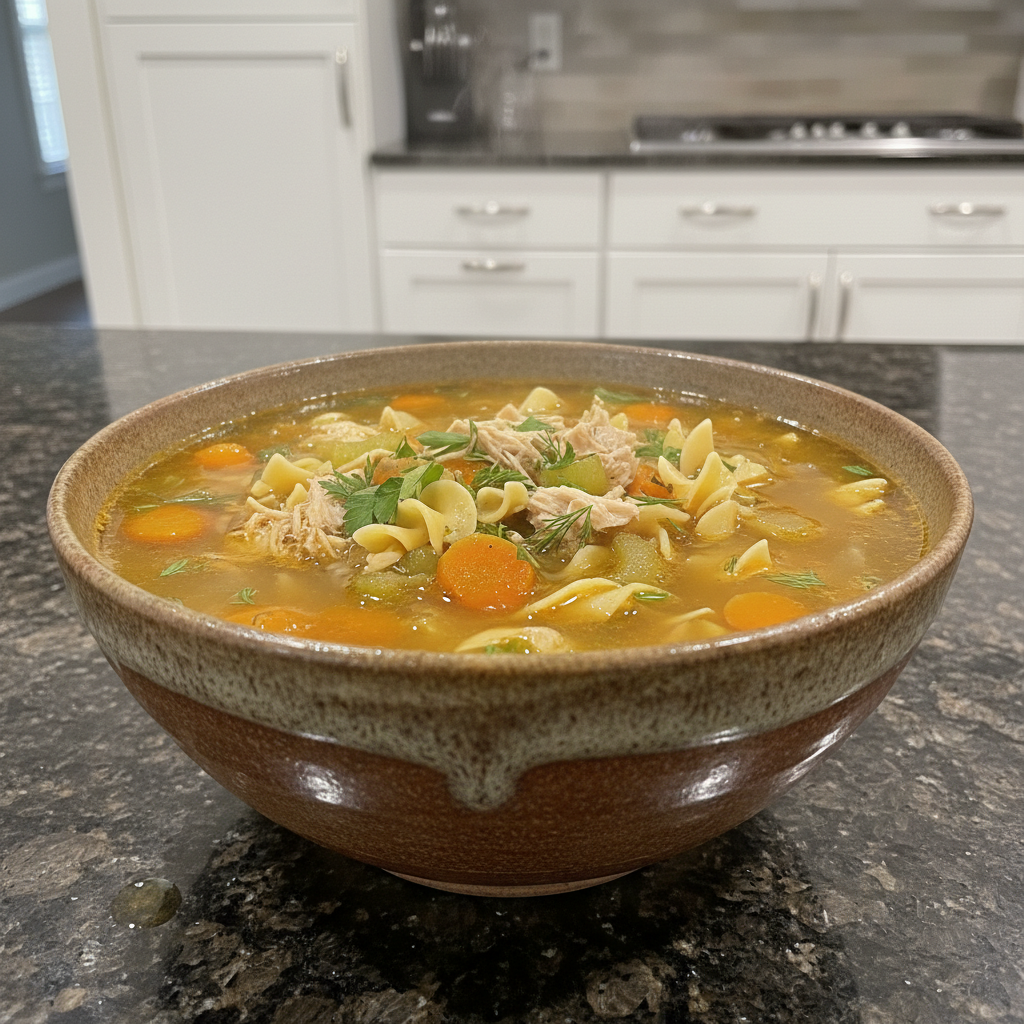
Ultimate Leftover Turkey Soup Recipe with a Flavorful Twist
Equipment
- Large Stock Pot
- Fine-mesh sieve
- cheesecloth
- large pot
- wooden spoon
- Ladle
- kitchen shears (optional)
- cleaver (optional)
Ingredients
For the Turkey Stock:
- 1 turkey carcass leftover from carving a whole turkey, including any leftover drippings or giblets (not the liver) if you have them
- Cold water
- 1 medium to large yellow onion quartered or cut into thick wedges
- 1 to 2 carrots roughly chopped (can include tops)
- 1 celery rib and some celery tops roughly chopped
- Several sprigs fresh parsley
- 1 to 2 sprigs fresh thyme or 1 teaspoon dried thyme
- 1 bay leaf
- 5 to 10 peppercorns
- Kosher salt
- Freshly ground black pepper
For the Turkey Soup:
- 1 to 2 tablespoons butter or turkey fat
- 1 to 1 1/2 cups chopped carrots
- 1 to 1 1/2 cups chopped onion
- 1 to 1 1/2 cups chopped celery
- 2 cloves garlic minced
- 3 to 4 quarts of the turkey stock you just made
- A few sprigs fresh parsley leaves, chopped (2 to 4 tablespoons)
- 2 teaspoons poultry seasoning (more to taste), or a combination of ground sage, thyme, marjoram, and/or a bouillon cube
- Kosher salt and freshly ground black pepper to taste
- 4 to 8 ounces egg noodles or 1/2 to 1 cup dry rice (optional)
- 2 to 4 cups leftover turkey meat chopped or shredded (don't use any of the meat from making the stock)
- 1/4 cup dry white wine (such as Sauvignon Blanc or Pinot Grigio) or dry sherry (for deglazing)
- 1 tablespoon fresh lemon juice
- 2 tablespoons fresh dill or chives chopped (for finishing)
Instructions
Preparing Your Turkey Carcass and Stock
- Before you start your stock, carefully remove any substantial pieces of leftover turkey meat from the turkey carcass. This meat is what you'll add back to your soup later. Set it aside in the refrigerator. The meat used for making stock will become flavorless and dry, so it’s essential to reserve fresh cooked meat for your soup.
- Place the turkey carcass, including the neck (if you have it), leftover skin, and bones into a large stock pot (an 8 to 12-quart pot is ideal). If you have any drippings that weren't used for gravy or any giblets (excluding the liver), add those too for extra richness. Now, cover everything with enough cold water to submerge the contents by about an inch. Add your rough-chopped yellow onion, carrots, celery, several sprigs of fresh parsley, 1 to 2 sprigs of fresh thyme, a bay leaf, and 5 to 10 peppercorns.
- Place the pot on high heat and bring it to a rolling boil. As soon as it boils, reduce the heat to low, just enough to maintain a bare, gentle simmer. As the stock begins to cook, impurities will rise to the surface in the form of foamy crud. Use a spoon or ladle to diligently skim foam from the surface; this is key for a clear and clean-tasting stock.
- Add about 1 teaspoon of kosher salt and 1/2 teaspoon of freshly ground black pepper to the stock. Remember, you'll adjust seasoning later, so don't over-salt at this stage as the stock will reduce.
- Allow the pot to simmer partially uncovered for a minimum of 4 hours. The longer it simmers (up to 6-8 hours), the more flavor will be extracted. Continue to skim any foam or impurities that rise to the surface occasionally. You'll notice the liquid transforming into a rich, golden broth, filling your kitchen with an incredible aroma.
- Once your stock has simmered sufficiently, carefully remove all the bones and vegetables from the pot. Then, pour the stock through a fine mesh sieve or strainer lined with cheesecloth into a clean container. This ensures your stock is perfectly smooth and clear.
- If you're planning to store your stock for future use, you can further reduce it. Continue to cook the strained stock longer, uncovered, to concentrate its flavors and reduce its volume, making it easier to store. You can always add water later when preparing your soup or other dishes.
Crafting the Flavorful Soup Base
- In a large, clean pot (the same one works after cleaning, or a fresh one), heat 1 to 2 tablespoons of butter, olive oil, or your rendered turkey fat over medium-high heat. Add the chopped carrots, onions, and celery. Sauté, stirring occasionally, until the onions are softened and translucent, about 10 minutes. They'll start to caramelize slightly, building a foundational flavor.
- Add the minced garlic and cook for just one minute more until it becomes fragrant. Now, for the unique twist: pour in 1/4 cup of dry white wine or dry sherry. Immediately scrape up all those delicious browned bits from the bottom of the pot with a wooden spoon – this is the magic of deglazing, adding incredible depth to your soup. Once the wine has mostly evaporated, pour in 3 to 4 quarts of your freshly made turkey stock. Stir in the chopped fresh parsley leaves and 2 teaspoons of poultry seasoning. Taste and adjust with kosher salt and black pepper as needed. Bring the soup to a gentle simmer and cook until the vegetables are perfectly tender.
Finishing Touches
- If you're adding egg noodles, stir them into the simmering soup and cook until they are al dente, about 4 minutes. If using rice, cook for about 15 minutes, or until tender. To prevent mushy noodles, you can also cook them separately and add them to individual bowls just before serving.
- Take your reserved leftover turkey meat, shred it into bite-sized pieces, and add it to the soup. Cook for just 1 minute more, allowing the turkey meat to warm through gently. Taste once more and adjust seasoning with salt and pepper if needed. Finally, for that vibrant finish, stir in 1 tablespoon of fresh lemon juice and a generous sprinkle of 2 tablespoons of fresh dill or chives. This brightens every spoonful!